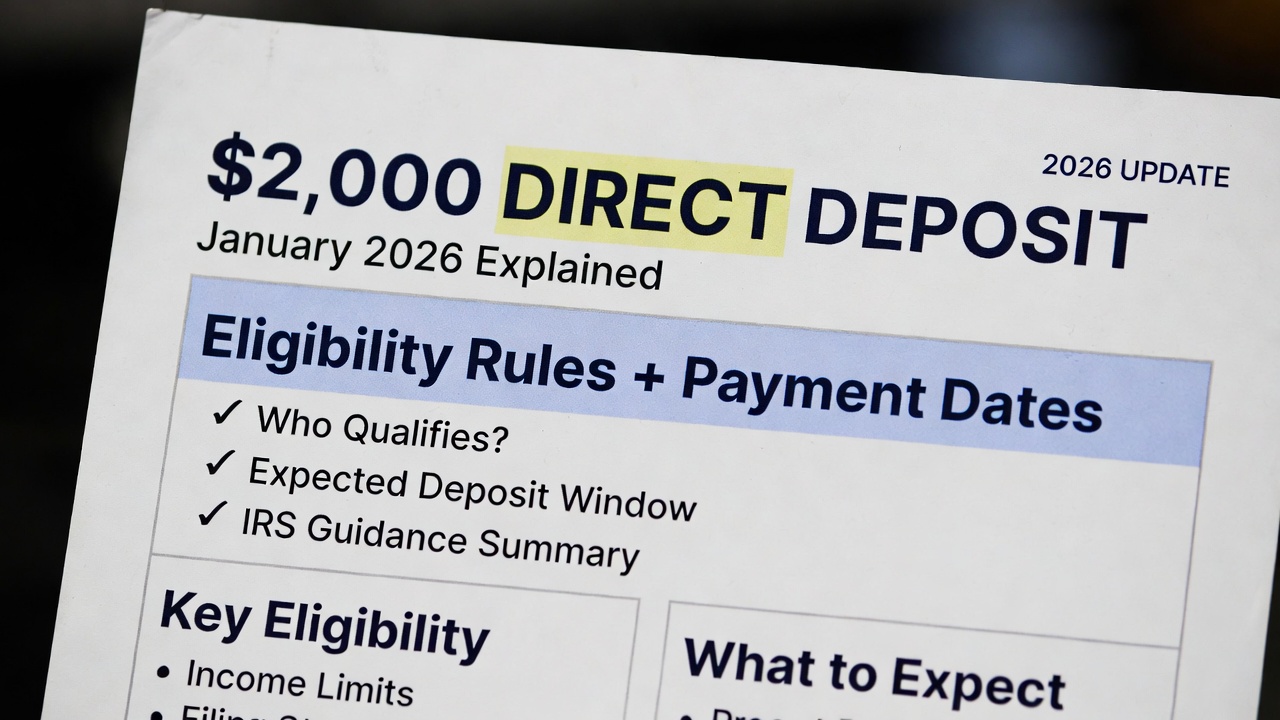
February 2026 IRS $2,000 Payment: Rising living expenses have kept household budgets under pressure across the United States as 2026 begins. After the holiday season, many families are balancing credit card dues, winter utility bills and steady increases in grocery and childcare costs. In this setting, conversations about a possible $2,000 IRS payment in February 2026 have attracted significant public interest.
While discussions continue online, it is important to distinguish between confirmed federal programs and proposals that are still under review. As per available documents and official communication channels so far, no universal $2,000 payment has been formally approved for automatic distribution to all taxpayers. However, if a targeted relief measure were authorized, its rollout would follow established IRS processing systems. Understanding those systems helps families set realistic expectations and avoid confusion.
Why a One-Time Federal Relief Payment Is Being Discussed
Temporary federal payments are typically designed to address short-term economic strain rather than provide ongoing income support. In past years, similar relief measures were introduced during periods of economic slowdown or high consumer inflation. The objective was to give households immediate liquidity so they could manage essential expenses.

In practical terms, a $2,000 payment could help cover rent, heating bills, school-related expenses or medical costs. However, such measures are generally structured as one-time assistance. A public finance expert recently noted that “relief checks are meant to cushion sudden economic shocks, not replace long-term employment income.” That distinction is crucial when families plan their monthly budgets.
Income Thresholds and Household Criteria Under Consideration
If a February 2026 IRS payment were to be approved, eligibility would likely depend on income levels reported on recent tax returns. Federal relief programs traditionally focus on low- and middle-income earners, with phased reductions for higher-income brackets. This may vary by case depending on legislative design.
Family size could also influence eligibility. Households with dependents may receive different treatment compared to single filers without children. For example, a married couple with two dependents earning within the prescribed income range might qualify, while an individual whose earnings slightly exceed the upper limit may not. Income caps, as per guidelines in previous programs, are strictly applied.

How the IRS Payment Process Would Likely Work
The Internal Revenue Service generally uses the most recent tax filings to identify eligible recipients. Rather than launching a new application system, authorities typically rely on existing records to streamline distribution. This reduces administrative burden and speeds up processing for most taxpayers.
Payments are usually issued in batches. Direct deposits are prioritized for those who have active bank details on file. If banking information is unavailable or outdated, paper checks may be mailed. According to reports from earlier relief efforts, this difference in payment method can significantly affect timing. Electronic transfers tend to arrive sooner than mailed checks, subject to bank processing cycles.
Expected February Timeline and Phased Distribution
Some discussions have pointed to mid-February 2026 as a potential starting point for disbursement. Even if approved, it is unlikely that all eligible recipients would receive funds on the same day. The IRS system processes payments in phases, grouping taxpayers based on record verification and payment method.

For instance, a taxpayer with verified direct deposit information and no filing discrepancies may see funds earlier than someone whose records require additional review. This staggered release does not indicate approval or denial; it reflects administrative sequencing. In past cycles, payments continued over several weeks rather than a single release date.
Record Accuracy and Banking Details: The Critical Factor
The accuracy of tax records plays a central role in payment timing. Names, Social Security numbers, addresses and bank account details must match IRS databases precisely. Even minor discrepancies may move a return into manual review, potentially slowing any associated payment.
Consider a scenario where a taxpayer changed banks after filing their last return but did not update direct deposit information. If a payment is attempted, the transfer could fail and be returned to the Treasury. Reissuance by paper check may extend delivery time. Verification is recommended through official IRS tools to confirm that personal and banking details are current.

Managing Relief Funds and Guarding Against Misinformation
For families who may qualify if a program is authorized, thoughtful allocation of funds could improve short-term stability. Some households might prioritize clearing high-interest credit card balances, while others may build a small emergency reserve. Although $2,000 may not resolve structural financial challenges, it could ease immediate cash flow pressure.
At the same time, caution is essential. Whenever federal payments are discussed, misleading messages and scams sometimes circulate. The IRS does not request fees to release payments and does not seek personal information through unsolicited calls or emails. Taxpayers should rely only on official announcements and verified government portals for updates. Based on available information, no confirmed nationwide $2,000 February 2026 payment has been finalized.
Clarification: As of now, there is no officially approved universal $2,000 IRS payment scheduled for automatic February 2026 distribution. Any future program would depend on legislative authorization, defined eligibility rules and administrative rollout plans.

Disclaimer: This article is provided for general informational purposes only and does not constitute tax, legal or financial advice. Payment eligibility, timelines and conditions are subject to government approval and individual circumstances. Readers are encouraged to verify details through official IRS announcements or consult qualified professionals for personalized guidance.