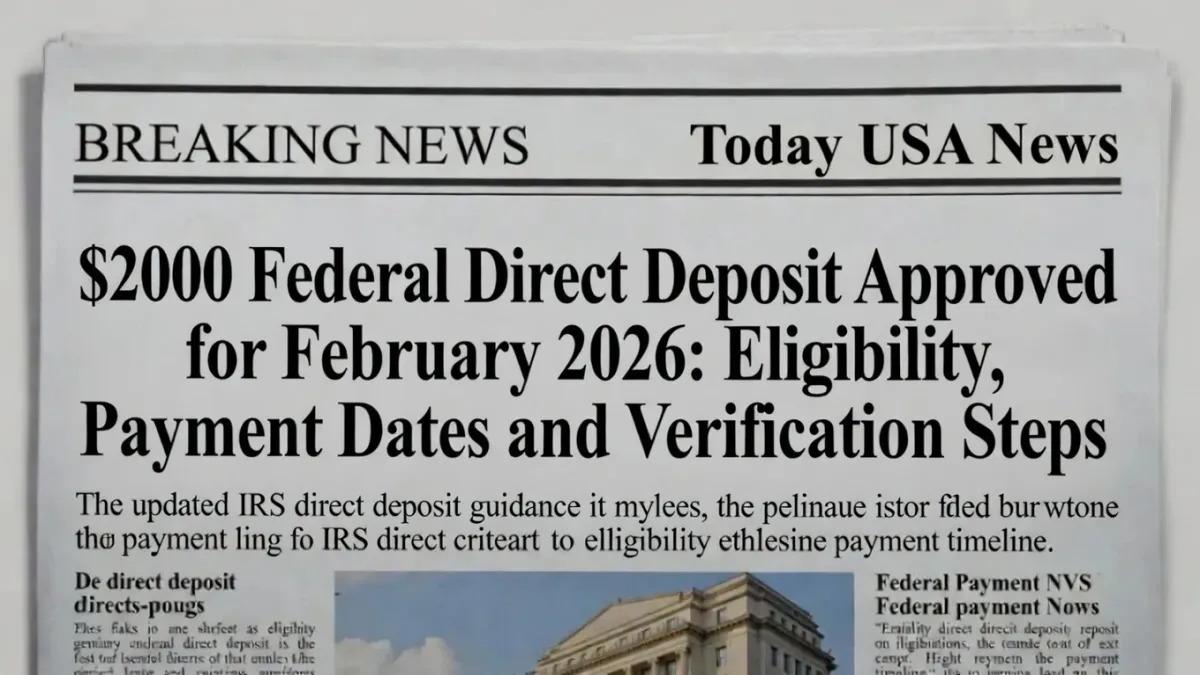
Federal $2,000 Deposits February 2026: As discussions grow around a proposed $2,000 federal deposit expected in February 2026, many Americans are seeking clarity rather than speculation. Retirees, veterans, and households enrolled in federal assistance programs are particularly attentive to whether they qualify and when payments, if approved, may be processed. According to reports circulating online, the deposit is being described as targeted support rather than a universal payout. However, official confirmation and program-specific guidance remain central to understanding the situation.
In practical terms, large-scale federal payments typically follow established administrative procedures. They are rarely automatic for everyone and often depend on documented eligibility criteria. Based on available documents from previous federal disbursement cycles, qualification is usually determined by tax records, benefit enrollment data, and verified personal information. As February approaches, beneficiaries are being advised to monitor official notices rather than relying solely on social media discussions.
How Federal Agencies Assess Eligibility Records
When federal deposits are announced, agencies commonly review the most recent tax returns and active enrollment status in programs such as Social Security or veterans’ benefits. Income thresholds, filing status, and dependent information may influence whether a person receives the full amount or a reduced payment. This may vary by case, especially for households with recent life changes such as marriage, divorce, or relocation.

Internal cross-verification systems are typically used to confirm lawful residency status and prevent duplicate payments. An official familiar with benefit processing explained that “most delays occur due to outdated personal records rather than ineligibility.” That statement reflects past payment cycles where incomplete documentation slowed otherwise approved transfers. Verification is recommended well before the expected payment window opens.
Why February 2026 Is Drawing Attention
Economic pressures remain a concern for many households entering 2026. Fixed-income retirees and veterans continue to manage rising healthcare, housing, and utility expenses. In that context, a $2,000 federal deposit, if implemented under approved guidelines, could provide temporary financial breathing space. Unlike emergency stimulus payments seen during earlier crises, current discussions suggest a more structured, eligibility-based approach.
Previous federal disbursement programs provide a useful comparison. During earlier cycles, direct deposit recipients with updated bank details generally received funds faster than those waiting for paper checks. That historical pattern may offer insight into how February payments, if finalized, could unfold. However, timelines depend entirely on agency-level processing schedules and administrative approval.

Understanding Staggered Payment Phases
Large federal deposits are typically issued in stages rather than on a single date. Direct deposits are often prioritized because they reduce administrative handling. Mid-cycle distributions may include corrected transfers or approvals that required additional review. Paper checks and prepaid debit cards, where applicable, usually take longer due to mailing and verification procedures.
Beneficiaries receiving funds from multiple programs should not assume all deposits will arrive simultaneously. Each federal department operates on its own calendar. In practical terms, this staggered approach helps manage high transaction volumes and reduces processing errors. While some may receive funds early in the window, others may see deposits spread over several weeks.
Record Accuracy and Its Role in Preventing Delays
Administrative data accuracy remains one of the most critical factors in timely payments. Incorrect bank account numbers, closed financial accounts, or outdated mailing addresses are among the most common reasons deposits are returned. When a transfer fails, agencies must verify updated information before reissuing funds, which can extend the timeline.

A realistic example highlights this risk. During a prior federal payment program, a beneficiary who had recently changed banks did not update her direct deposit details. The initial transfer was rejected, requiring identity verification and manual correction. Once updated through the official portal, the payment was reprocessed within days. Such cases illustrate how proactive record maintenance can prevent avoidable delays.
Fraud Risks During High-Profile Payment Periods
Periods of heightened public interest in federal deposits often coincide with increased scam activity. Fraudulent messages may claim that additional personal details are required to release funds. As per guidelines followed in previous payment programs, official agencies do not request sensitive information through unsolicited calls, emails, or text messages.
Beneficiaries are advised to access information only through secure government portals and verified helpline numbers. Banks may also assist if suspicious transactions or communications are detected. In practical terms, caution during widely discussed payment cycles is as important as eligibility verification. Staying informed through official channels reduces the likelihood of financial fraud.

Practical Considerations Before the Expected Window
For individuals anticipating a possible February 2026 deposit, reviewing recent tax filings and confirming benefit enrollment status may help avoid complications. Filing pending returns, updating dependent details, and ensuring banking information matches current records are steps commonly recommended by financial advisors. These measures do not guarantee approval but align with standard procedure.
It is equally important to recognize limitations. Payment amounts, eligibility thresholds, and processing timelines depend entirely on official agency directives. Based on available information, no automatic approval applies to all recipients. Each case is assessed individually under existing program rules. Monitoring formal communications remains the most reliable method of verification.
Disclaimer: This article is for informational purposes only. Payment eligibility, amounts, and timelines are subject to official federal agency guidelines and may vary by individual circumstances. Readers should verify details through authorized government sources before making financial decisions.