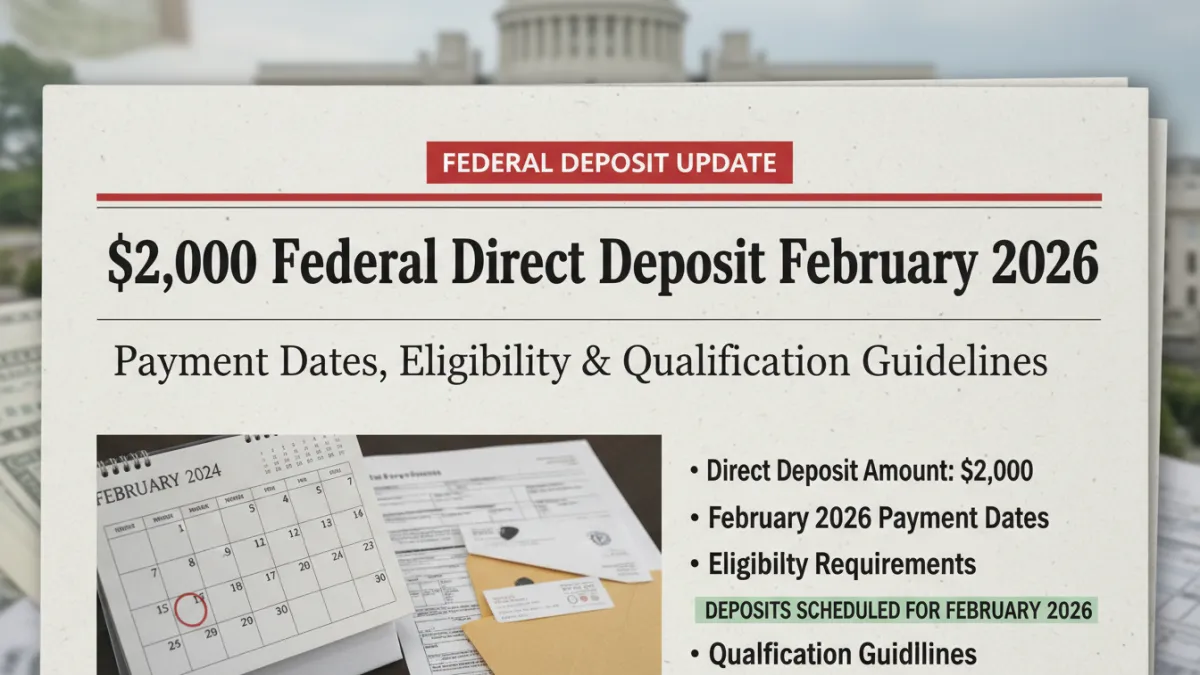
$2,000 Federal Direct Deposit February 2026: Discussions about a potential $2,000 federal direct deposit in February 2026 have captured national attention. While the payment could provide financial relief to some households, it is not an automatic distribution for all Americans. Eligibility depends on income limits, recent tax filings, or participation in specific federal benefit programs. Understanding how the process may work is essential for households planning expenses and seeking to avoid delays or errors in receiving funds.
Historical experiences with federal stimulus payments and tax refunds show that misinformation spreads quickly, leading some to expect deposits that may not exist. Accurate knowledge about eligibility, timing, and verification is crucial for ensuring preparedness. Beneficiaries who follow official guidance are more likely to receive payments without unnecessary setbacks.
Defining Who May Qualify
Eligibility for the $2,000 payment is anticipated to focus on income thresholds, tax records, and benefit enrollment. Low- to moderate-income households, recent federal tax filers, and recipients of benefits like Social Security or veterans’ assistance may be reviewed automatically. Household size and dependent claims can also affect the amount a recipient may receive. Income phase-out limits could reduce payments or exclude higher earners entirely.

Program administrators are likely to rely on existing records to determine eligibility rather than requiring a separate application. However, recipients should confirm that personal and financial records, including tax filings and benefit enrollments, are accurate and current to avoid complications.
Anticipated Payment Rollout for February 2026
Officials may issue the $2,000 payment in stages, prioritizing recipients enrolled in electronic payment systems. Early February 2026 is expected to see the first batch of direct deposits, followed by mid- and late-February transfers. Paper checks or prepaid debit cards for those without direct deposit accounts may take additional weeks to arrive due to mailing and verification processes.
Phased distribution helps manage large-scale payments and ensures verification procedures are completed accurately. Beneficiaries with updated direct deposit details are typically first to receive funds, highlighting the importance of maintaining current banking information.

Practical Steps to Avoid Delays
Delays often arise from outdated banking or personal information. Beneficiaries should verify account and routing numbers, update mailing addresses, and ensure recent tax filings are accurate. Correct information in federal records streamlines processing and reduces the chance of rejected deposits.
It is equally important to avoid unofficial requests for personal or banking details. Government agencies do not charge fees to release payments and will only communicate through secure portals. Adhering to official instructions protects recipients from fraud and unnecessary delays.
Monitoring and Verifying Your Payment
Beneficiaries should regularly check official portals to track payment status. Taxpayers can verify pending refunds through federal tax tracking systems, while Social Security or veterans benefit recipients should review their account statements. Verification ensures that recipients are aware of any processing issues early and can act promptly to resolve them.

Even if enrolled in electronic payment systems, mismatched information or identity verification requirements can slow the process. Monitoring updates from the relevant federal agency reduces uncertainty and helps recipients plan effectively for the expected funds.
Common Causes of Delays and Corrective Measures
Payments may be delayed due to identity verification checks, mismatched income records, incorrect dependent claims, or amended tax filings. Duplicate or incomplete filings are frequent causes of extended processing times. Acting quickly to correct errors in official portals or responding to verification notices can minimize disruptions.
For those experiencing delayed deposits, agencies may reissue payments via check, initiate a payment trace, or request additional documentation. Early attention to these steps can ensure timely receipt and prevent prolonged uncertainty.

Financial Considerations for Recipients
If received, a $2,000 payment can support essential household expenses, including rent, utilities, medical costs, or debt repayment. However, financial advisors recommend waiting for confirmation of deposit before committing funds. Planning responsibly ensures the payment contributes meaningfully to household stability without introducing risk.
Past experiences with one-time federal disbursements show that proactive monitoring, accurate account records, and understanding eligibility guidelines help recipients maximize benefits while avoiding pitfalls associated with misinformation or scams.
Disclaimer
This article provides general informational guidance only. Eligibility, payment amounts, and deposit timelines for the $2,000 federal direct deposit in February 2026 are determined by official federal agencies and depend on individual circumstances. Recipients should consult official federal portals and qualified financial or tax advisors for personalized guidance.